

When most people think of the famous author Ernest Hemingway, they think of places like Havana, Paris, Key West, or even where he was born in Oak Park, Illinois.
What they might not know is that he also lived in northern Michigan. The Hemingway family had a summer cottage on Walloon Lake, and he spent every summer of his young life there hunting, fishing, and sometimes visiting downtown Petoskey.
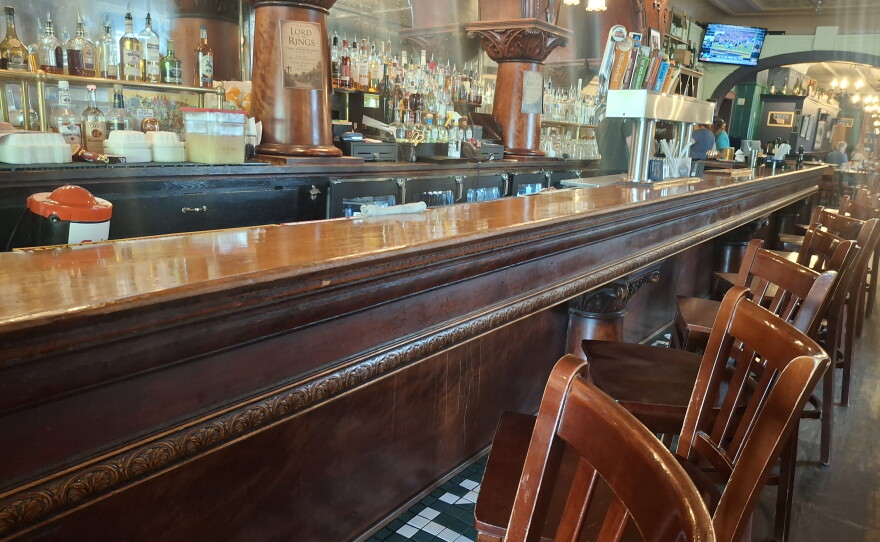
This connection continues to draw international visitors to the area, especially since Hemingway used northern Michigan as a setting for some of his early work. One of the places he references is a Prohibition-era saloon called the Annex, now City Park Grill.
Laurie Baum, front-of-house manager for the bar, says visitors come all the time to see Hemingway’s favorite seat and to touch a blackened divot in the bar where he might have put out his cigars.
“There are some that have come in and gone to every place, like where he died in Idaho and then Key West,” Baum said. “They're on a Hemingway mission, to find out more about him.”
Hemingway first came to Walloon Lake when he was six weeks old, in 1899, and continued to spend summers there until 1921, when he was married in nearby Horton Bay.
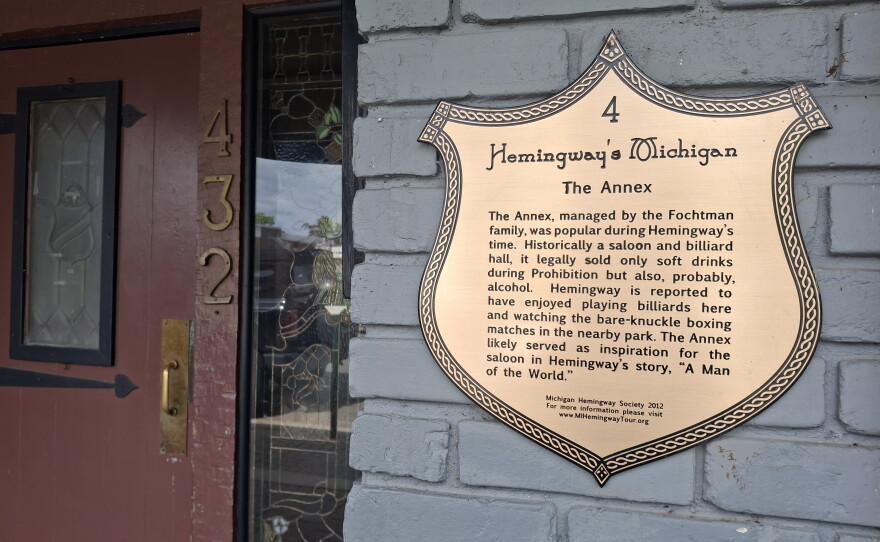
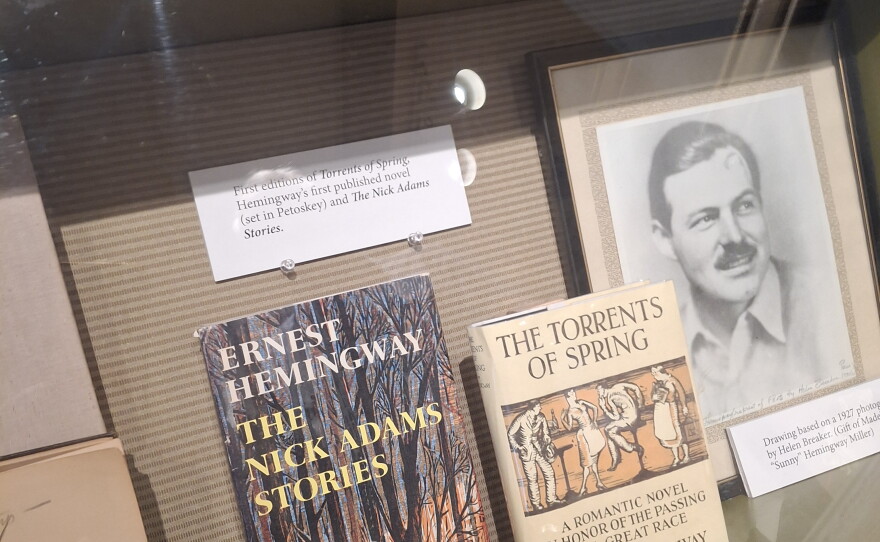
Downtown Petoskey is peppered with commemorative plaques describing the restaurants Hemingway ate at, hotels he slept in, and the former barbershop where he cut his hair. Jane Garver, director of the Little Traverse History Museum in Petoskey, says visitors from as far as Japan come to see the places he wrote about and be in the same places Hemingway frequented.
“I've had people who are just interested in seeing the black squirrels because he writes about the black squirrels, and they ask me, ‘Where can I find one?’" Garver said. "And I say, ‘Well, they're right there. Go look in the park.’”
Dan Rupp, board member of the Michigan Hemingway Society, said the author’s time in Michigan was a formative experience people often overlook.
“The real question in my mind always is, what would Hemingway have been like if he hadn't come up here?” Rupp said. “I mean, he would have been totally different, because it was up here that he not only learned to hunt and fish and got so attached to the land and the weather and everything, but he also had to mix with so many different people.”
According to Rupp, the connections Hemingway made in Petoskey allowed him to get a job as a reporter for the ‘Toronto Star,’ where he eventually worked as a foreign correspondent in Paris.
A statue down the street from City Park Grill depicts young Hemingway waiting for the train to depart for his new job in Toronto. Petoskey Area Visitors Bureau director Jim Powell views it as the perfect way to show a pivotal moment in Hemingway’s life that took place in downtown Petoskey.
“The statue is there for a reason, because that was hours before he boarded the train to his first job in Toronto, where he really became that writer and really launched himself into the world,” Powell said. “You look at that statue, and it's like, ‘Had he not got on that train, had he turned left instead of right, where would the world have gone?’”